
AZ-1 Original: Connecting for Care
One man's journey with Parkinson's has been transformed, thanks to his community, high speed internet and Zoom.
One man's journey with Parkinson's has been transformed, thanks to his community, high speed internet and Zoom.
The Quilt is the national coalition of non-profit U.S. regional research and education networks representing 43 networks across the country. A collaboration of U.S. research and education networks committed to innovation and advancement of these purpose-built networks that empower our public service missions.

December 9, 2024
Roughly 175,000 Arizona homes still lack access to broadband internet, and many of them are in tribal and rural communities; the state Commerce Authority says it’s looking to change that.
Monday, November 25, 2024
Arizona's goal is to provide dependable and affordable high-speed internet services to every community and access to the necessary digital skills, so every resident can fully participate in a digital world. This is look at the team of elected officials who will be Arizona’s voice in Washington.
NTIA and the U.S. Census Bureau have embarked on an experimental project to produce single-year estimates of Internet adoption for small areas, addressing a key gap in available data to better serve the policymaking process.

The Arizona Technology Council focuses on promoting technology innovation and workforce development, supporting businesses and startups in the technology sector. ATC provides resources, networking opportunities, and advocacy for technology-related initiatives.

GetSetUp is a virtual older adult learning platform that first focuses on the digital equity/inclusion, then after users understand their device we offer classes in physical health, mental health, workforce development as well as cybersecurity.

Connected Journeys: Stories of Broadband and Digital Equity
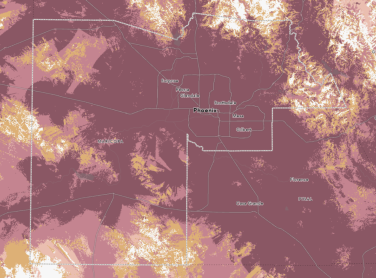
This page contains a StoryMap with analysis of changes from June 2023 dataset to December 2023 dataset.

Mapping Broadband Health in America is a novel, interactive mapping platform created by the Connect2HealthFCC Task Force.
The American Indian Policy Institute is home to the newly formed Center for Tribal Digital Sovereignty, formed in partnership with the National Congress of American Indians. This Center is the first and only one in the nation dedicated to helping tribal governments, leadership, and communities understand the complexities of digital sovereignty. It provides access to resources and serves as a clearinghouse for tribal digital sovereignty. The center works towards the following goals and concepts: scholarship, capacity building, policy research and advocacy, and forming a coalition of organizations that work together to support tribes.
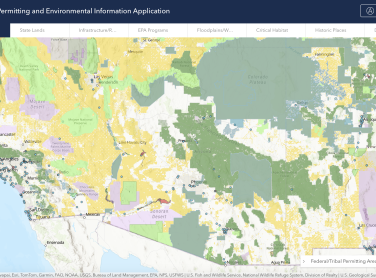
This Application was created to help with permitting planning and environmental review preparation efforts by providing access to multiple maps from publicly available sources, including federal review, permitting, and resource agencies, as well as information about infrastructure and right of way.
The Center on Rural Innovation (CORI) has created a suite of BEAD application resources and an interactive mapping tool to help smaller ISPs be more competitive when applying for this historic funding.

This map from The Center on Rural Innovation (CORI) allows potential BEAD applicants to explore eligible project areas, view project areas funded by previous federal grants, and easily see existing ISP footprints in potential deployment areas. The tool is designed to support efficient initial assessments of eligibility by census block, and the creation of a high-level grant strategy based on that eligibility.

Arizona State University works to advance digital equity in Arizona. The university offers a range of programs including workforce development, financial and digital literacy, disability services, career services, and research initiatives related to technology and innovation. ASU’s robust community outreach programs, research collaborations, and innovative partnerships, seek to address the barriers faced by underserved communities including challenges related to accessing and utilizing technologies.

The Arizona Department of Homeland Security provides cybersecurity services at no-cost to State, Local, Tribal, and Territorial Governments (SLTTs) and K-12 school districts through the Statewide Cyber Readiness Program. Services and products include Advanced Endpoint Protection, Security Awareness Training and Anti-Phishing, Converged Endpoint Management, Multi-Factor Authentication, and Web Application Firewall.

The Arizona Department of Education promotes digital literacy and offers resources to educators and students to enhance technology integration in schools. Their initiatives aim to equip students with the necessary digital skills for academic success and future workforce readiness.

Arizona's Broadband Equity, Access and Deployment (BEAD) Program is the largest broadband investment in the state's history with the principal objective of universal broadband access for all.
This page contains a list of grants related to broadband in Arizona
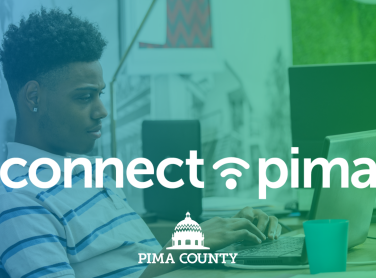
How Pima County is working to close the digital divide and link communities to affordable, high-speed internet access.

President Biden wants to connect everyone in America to affordable, reliable high-speed Internet. The Bipartisan Infrastructure Law provides $65 billion in funding to help achieve that goal.
Asset mapping and management is the process of collecting, organizing, and tracking data on relevant infrastructure assets that can be utilized for broadband deployment.
The Tribal Broadband Connectivity Program is a $3 billion program directed to tribal governments to be used for broadband deployment on tribal lands, as well as for telehealth, distance learning, broadband affordability, and digital inclusion.
Broadband Presentations and Documents from Coconino County, AZ
Learn about Arizona's Broadband Efforts from the ACA, where the state is actively working to improve internet access and connectivity for its residents.